
When Sensory Needs Look Like Behavior Problems

Have you ever watched your child melt down over socks, fall apart in the grocery store, refuse toothbrushing, or come home from school and suddenly lose it?
It can be confusing, especially when the problem seems small from the outside.
As a child therapist, I often reminded parents that what looks like “bad behavior” may be a child’s body trying to manage too much. Many neurodivergent children are overwhelmed by sound, touch, smell, movement, hunger, fatigue, or body signals they cannot explain yet.
Behavior Is a Clue
When a child yells, refuses, hides, cries, tantrums, or says, “I can’t,” it may be easy to assume they are being defiant.
Sometimes they are overwhelmed.
Dr. Ross Greene says that if a child could do well, they would. When a child is not doing well, something is getting in the way.
For many children, that “something” may be sensory stress.
When behavior is troubling to you it can help to ask:

What was my child’s body trying to manage right before the behavior changed?
Instead of Labeling Children as Defiant or Disobediant Check These Five Things
1. Is there a body need?
Is your child hungry, thirsty, tired, too hot, too cold, in pain, or needing the bathroom?
Some children do not notice these body signals early. By the time adults see the behavior, the child may already be overloaded.
2. Is there sensory overload?
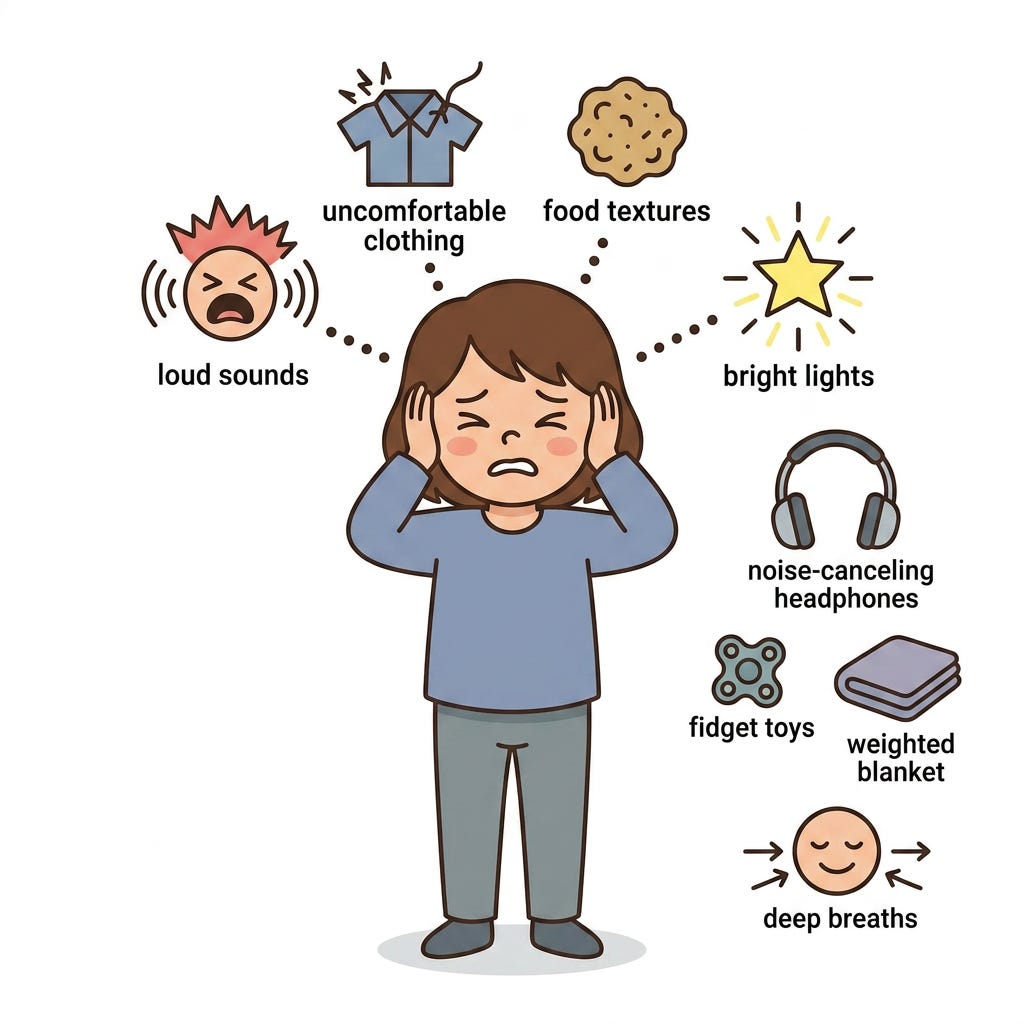
Noise, lights, smells, clothing, food textures, crowds, or touch can feel intense for some children.
A sock seam, a loud cafeteria, bright store lights, or the smell of food may feel much bigger to the child than it looks to the adult.
3. Is the transition too hard?
Leaving the house, getting into the car, stopping a favorite activity, starting homework, or moving from school to home can take more effort than adults realize.
Transitions ask the brain and body to shift quickly. Some children need more time and support.
4. Does the child need more body input?
Some children crash, climb, chew, lean, push, pull, squeeze into small spaces, or hang upside down.
These behaviors may be frustrating, but they can also be signs that the child’s body is looking for movement or pressure to feel organized.
Instead of only saying, “Stop jumping,” try asking:
What safe body input could help right now?
That might mean wall pushes, carrying groceries, animal walks, jumping on a trampoline, squeezing a pillow, or using a safe chew tool.
5. Does the child have the words yet?
Some children cannot say:
“That sound hurts.”
“My body feels wrong.”
“I am hungry.”
“I need pressure.”
“I need a break.”
So the message comes out through behavior instead.

Download some scripts to help talk to your child about this here
Common Places Sensory Needs Show Up
Sensory needs often show up in everyday routines.
Clothing can be hard when tags, seams, socks, shoes, or waistbands feel uncomfortable.
Hygiene can be hard when toothbrushing, hair brushing, bathing, face washing, or nail trimming feels like too much input.
Meals can be hard when textures, smells, temperatures, or mixed foods trigger gagging, refusal, or panic.
Public places can be hard because stores, restaurants, school cafeterias, and crowded events combine noise, lights, smells, waiting, and social demands.

After school can be especially hard. Some children hold it together all day and fall apart at home because home is the first safe place their body can release.
Helpful Supports Are Not Rewards
Sensory supports should not be treated like prizes children have to earn.
Headphones, movement breaks, fidgets, quiet spaces, visual schedules, and planned resets may be what help a child get through the day.
Taking those supports away after a child struggles can remove the very tools that help prevent the next meltdown.
A child who needs headphones is not getting special treatment.
A child who needs a movement break is not getting out of work.
A child who needs a quiet space may be trying to regulate, not avoid responsibility.
Try This for One Week
Pick one hard moment that keeps happening.
Maybe it is mornings, homework, bedtime, meals, grocery trips, or getting out the door.
After the hard moment, write down:
What happened right before?
Was there noise, touch, smell, hunger, fatigue, or a transition?
Did my child need quiet, movement, pressure, food, rest, or fewer demands?
What support could I try earlier next time?
You are looking for patterns, not blame.
When to Seek Extra Help

Consider talking with your child’s pediatrician, therapist, school team, or an occupational therapist if sensory needs are affecting eating, hygiene, sleep, school, safety, emotional regulation, or family stress.
Sensory needs can overlap with ADHD, autism, anxiety, trauma, learning differences, sleep issues, and medical concerns. A thoughtful assessment can help you understand the full picture.
A Simple Question to Keep Coming Back To
The next time your child’s behavior feels confusing, try asking:
What is my child’s body trying to manage right now?
That question can help you slow down, look underneath the behavior, and choose support before the situation gets bigger.
I hope you enjoyed this newsletter.
If so please like, share or comment.
I am a therapist of 31 years now writing several susbtacks and working with neurodivergent women as a therapist and support group facilitator.
Kristen McClure, MSW, LCSW
Great advice for teachers too! I’ve been teaching high school for a long time, and while I don’t use lecture as an instructional format, many of my students have needed movement or sensory breaks. But as an institution, we are slow to adopt new ideas that treat children as children rather pre-university level adults. No recess, no fun, sometimes very little acknowledgement that sitting still for an hour or hour and a half at a time is difficult for anyone, especially those with ADHD or sensory processing disorder. Thanks for the post!