
Time Supports for ADHD Children
An affirming guide for parents of school-age neurodivergent children

Dear Parents,
Many ADHD children struggle with time.
Your child may have difficulty:
noticing time pass
knowing how much time is left
estimating how long something will take
knowing when to begin
remembering what time to do something
keeping track of the when to do steps in a routine
stopping one activity and beginning another
This can make it stressful to deal with daily life, especially as you head back into the school year.
Because ADHD children have brain-based differences that cause these issues, punishing, yelling, or nagging them into getting better with time isn’t helpful.
As parents, the most helpful thing you can do is make time easier to notice and understand.
Strategies That May Help
1. Replace Time Words
Words such as “soon,” “later,” and “in a minute” confuse ADHD children.
Instead of:
“We are leaving soon.”
Try:
“We are leaving when this song ends.”
Instead of:
“You can play a little longer.”
Try:
“You can go down the slide three more times. Then we need to leave the playground.”
Choose the kind of information your child can use most easily. Some children respond well to clock times. Others understand songs, pages, events, or completed steps more clearly. This applies even for older children.

2. Tell Your Child When to Begin
Knowing when something happens is not the same as knowing when preparation needs to start.
Your child may know that you need to leave at 8:00, but they don’t know what that means. They don’t know when to stop playing, get dressed, eat breakfast, pack their bag, or find their shoes.
“We leave at 8:00, so the getting-ready begins at 7:15.”
Connect the start time to a cue:
phone alarm: 7:15 — Start getting ready
a routine card placed where the routine begins
an adult helping the child begin the first step
a specific event: After this show ends, we start getting dressed.
2. Make Multi-Step Routines Visible
“Get ready for bed” contains several different tasks, and each one takes time.
One solution that can help is a routine card.
A routine card could include pictures and words:
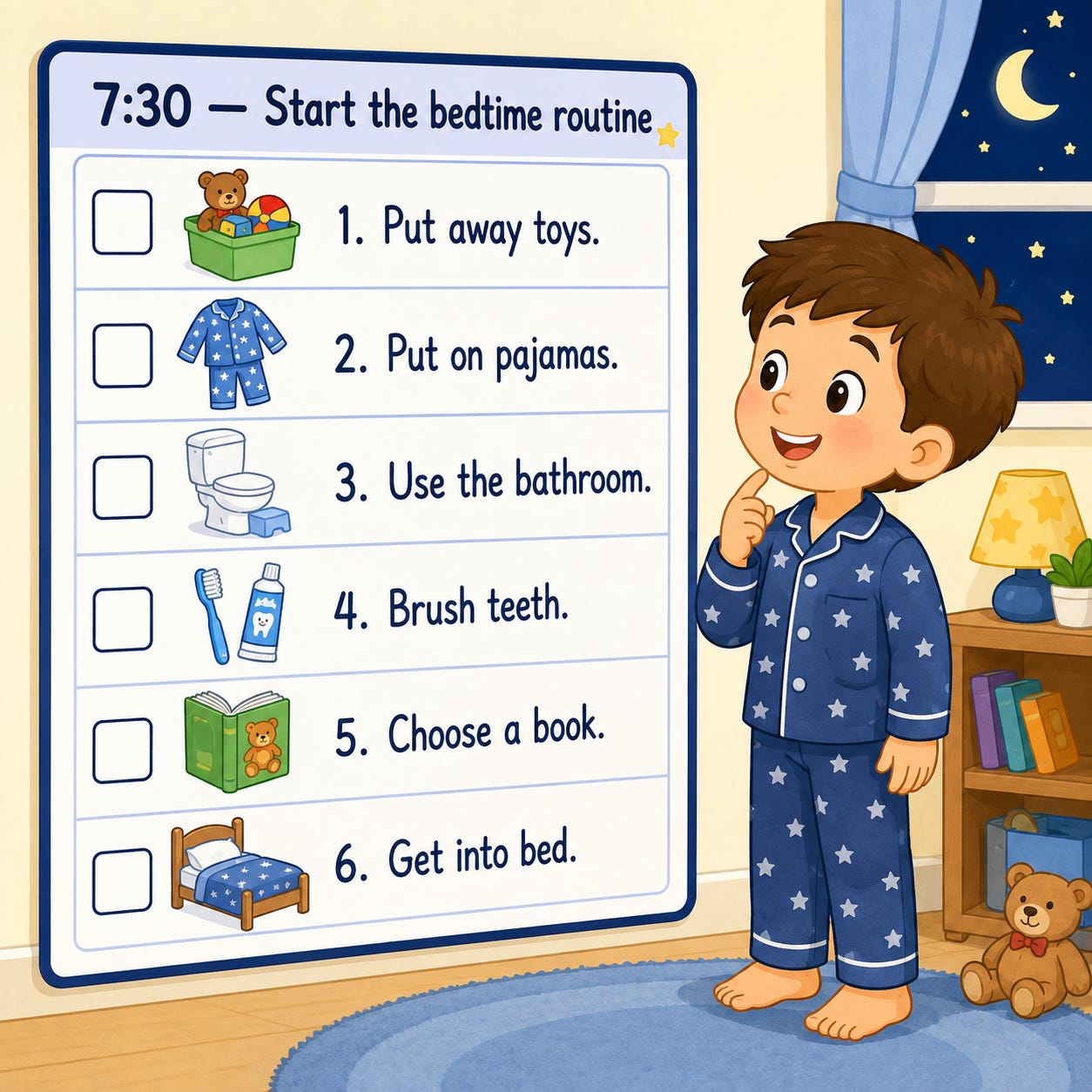
7:30 — Start the bedtime routine
Put away toys.
Put on pajamas.
Use the bathroom.
Brush teeth.
Choose a book.
Get into bed.
4. Use Reminders for Routines
A phone alarm, visual or sound cue, or reminder from an adult can signal when it is time to begin a routine.
Your child can check off each step on a whiteboard or move a magnet down the list on a magnetic board.
A visible routine makes the sequence available without requiring your child to remember, organize, and monitor every step internally.
5. Smooth out Transtion Times
Transitions may be especially difficult when your ADHD child is deeply focused.
You can help prepare your child for a transition by:
giving clear information about when the activity will end
using a timer or countdown preferably visual
giving a clear, specific stopping point
providing your child with time to save their work
giving them information about what will happen next
For example:
“Dinner is in ten minutes. When the timer ends, please save your game, turn off the screen, and meet me in the kitchen.”
For an activity without a natural ending, you might say:
“You did such a great job! You can add three more blocks. Then we have to get ready for bed. You can continue tomorrow.”
Transition preparation is most useful when it includes both the ending and what happens next.
6. Leave Buffer Time
Children need time to recover adjust think and take a breath and so do adults.
When a routine usually takes 20 minutes, allowing 30 minutes may reduce rushing, stress, and tendency to lose your cool with your child.
Rushed timelines often contribute to child meltdowns.
7. Check In With Your Child About Whether the Time Support Is Helping
Ask your child:
“Did that help or feel your worried or stessed?”
Notice whether time supports help children and adjust them when necessary.
Most ADHD adults continue to use these supports throughout their lives. Learning time supports is a life long skill.
Instead of asking:
“How do I teach my child to be on time?”
Try asking:
“How can I make time easier for my child to access?”
Children also need protection from the shame that can grow around being late, forgetting, or repeatedly misjudging time. An affirming parenting approach helps create this.
I hope you and your family have a good week and this newsletter was helpful in some way.
Kristen McClure, MSW, LCSW
Neurodivergent-affirming therapist and advocate
Does anyone have suggestions on templates for routine cards? My own ADHD perfectionism means ive thought about making these for my kid on canva for the better part of a year 🤦🏽♀️ There has to be an easier way
This is helpful for me as an adult with ADHD. Thank you. I have made better use of my phone calendar so I can make sure that I don’t fill my schedule and become overwhelmed. And my niece and nephew both need cues and systems to help with transitions as they head to college. Thanks!